It was forecast to be the hottest June day on record. That called for some swift action: frantic telephone exchanges to arrange an impromptu crash course on operating the air conditioning for the driver of the Soar Valley bus that was to take us to Cresswell Crags the next day. Apparently the system is more tricky than what you find in the average car. And that aircon turned out to be a real godsend!
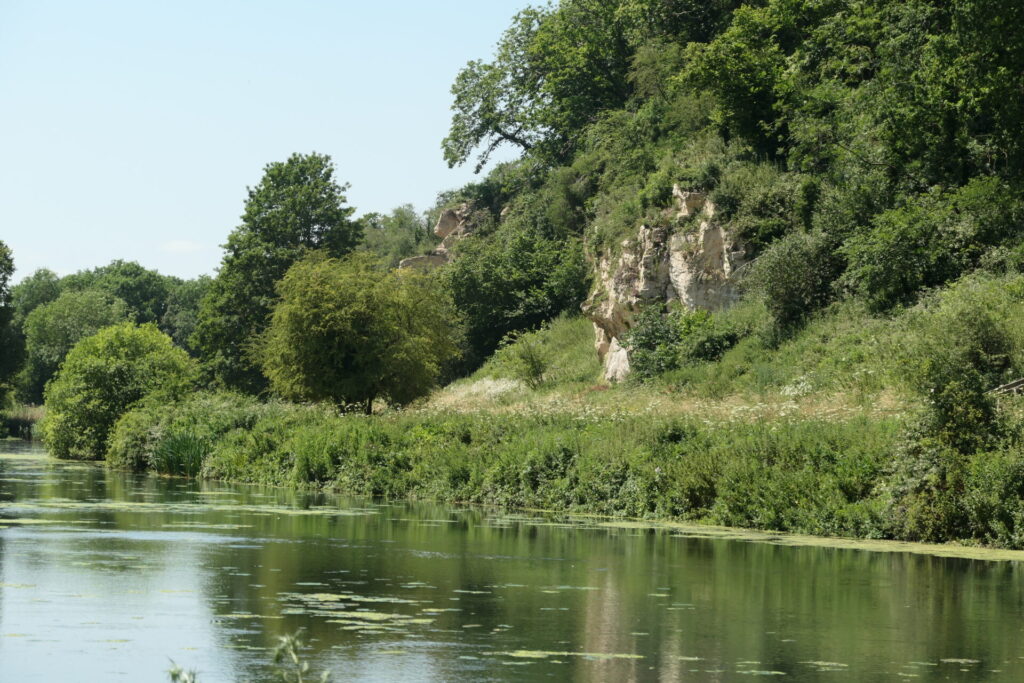
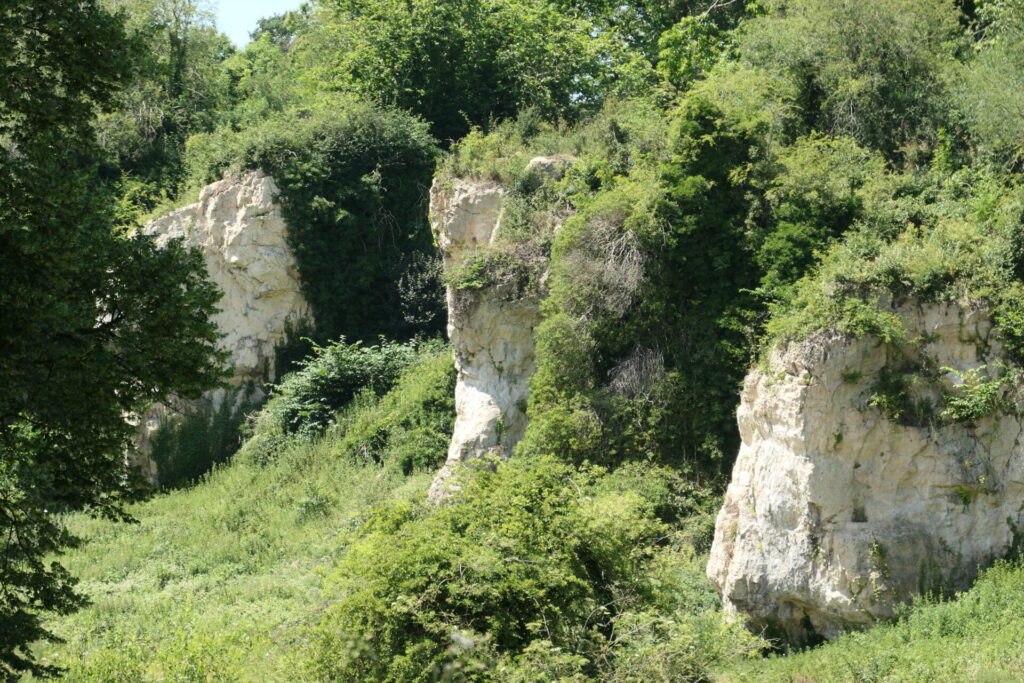
The Cresswell Crags site on the border of Derbyshire and Nottinghamshire is very picturesque. A small lake set in a deep limestone gorge is rimmed by huge rocky crags where prehistoric caves were discovered towards the end of the nineteenth century.
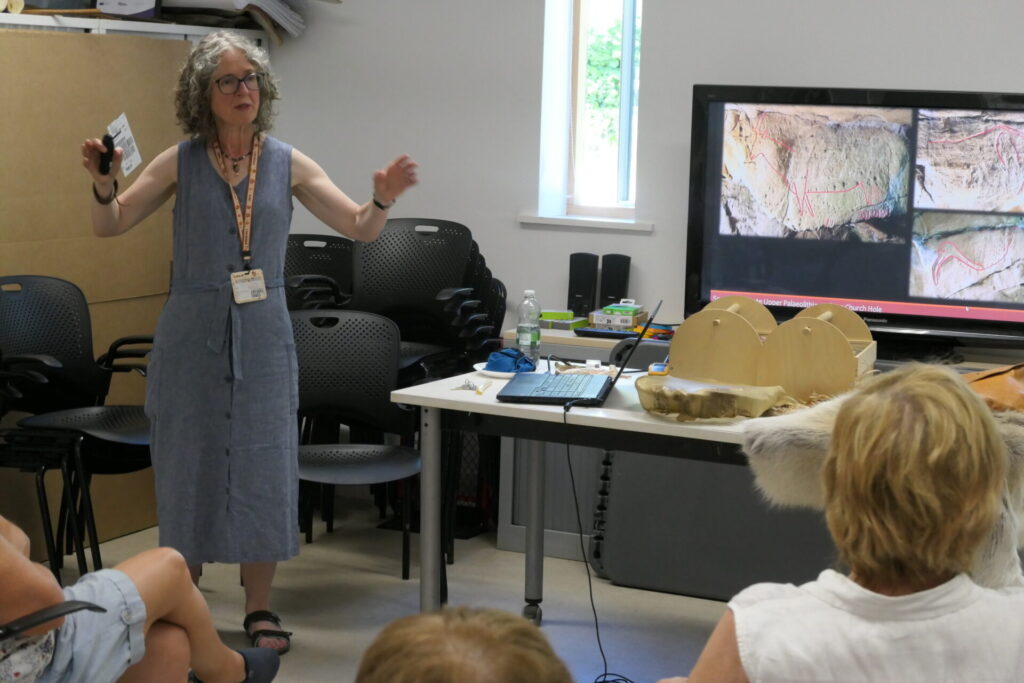
We enjoyed an introductory talk by our guide, Jo. She told us that these caves were occupied by nomadic Neanderthals and, later, by modern man (Homo sapiens), in the last ice period of between fifty and ten thousand years ago. Primitive artforms, from what archaeologists call the late Palaeolithic period, can be spotted in some of them. There were images of stags, bison and birds, and we were reminded that at this time Britain didn’t yet exist in island form, but was simply part of a wider European land mass where all kinds of creatures we don’t see here today once roamed, such as bears, hyenas and mammoths.
In fact, to the untrained eye some of these images - rock engravings and line drawings using pieces of ochre - aren’t immediately easy to recognise. But we were able to cheat a little because, on photographs, the faint lines were marked out more clearly. We were also shown replicas of small carvings and other artifacts from the period, all of which helped us begin to imagine a little of what early human life must have been like, all that time ago. Then we were desperate for some air. A final short stroll along the tranquil ravine was a soothing tonic to the senses. But that fierce heat soon had us heading back to the blissful cool of the aircon again.. and homeward bound.