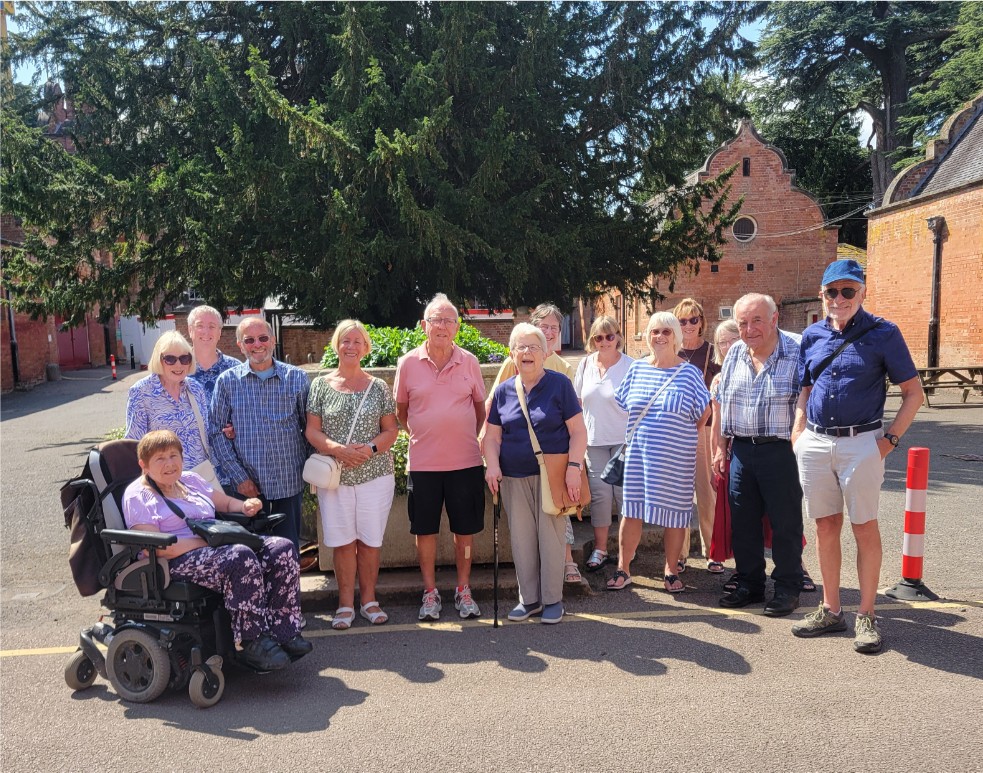
In July the History Group enjoyed a memorable, informative and enlightening WWII themed private tour of Beaumanor Hall and outbuildings, which had a massive contribution to play in the war.
Our group of 14 people were welcomed by our superb guide Jonno, who proved to have a vast knowledge of the hall and its history. During the war this location became a top-secret venue. He explained that the house we see today is actually the third one on this site, the previous two having been demolished under new ownership!
In 1939-1945 the hall and grounds were sold for military purposes during the Second World War, and a number of outbuildings were constructed and cleverly designed to look like farm buildings, barns, cottages etc, to disguise their real purpose – monitoring, reading and reporting on German radio and Morse Code messages.
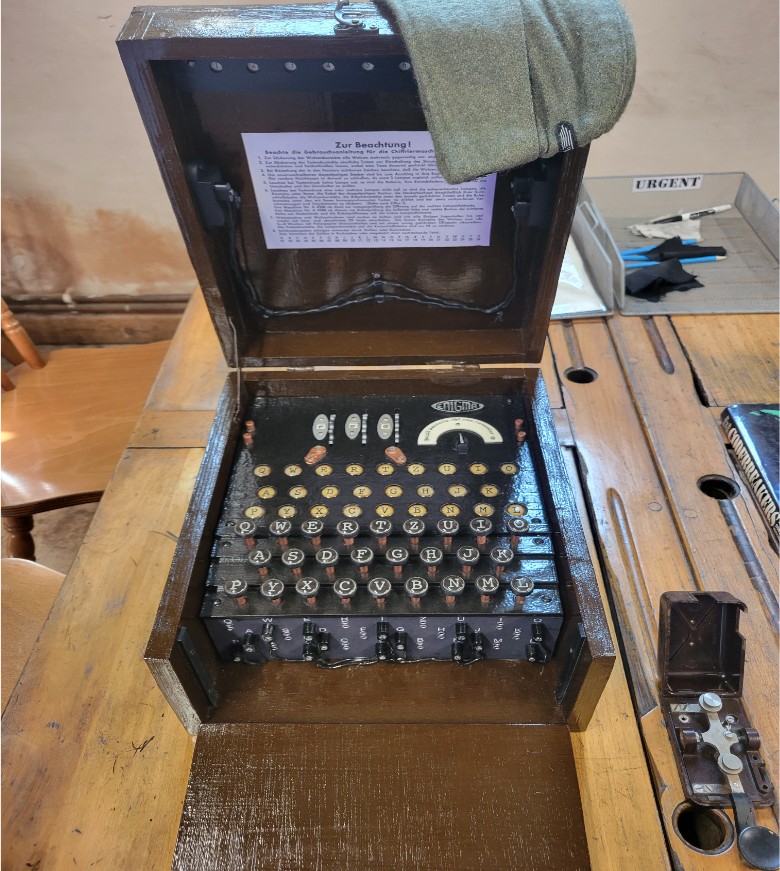
We were shown the Morse Radio Room where a large number of highly skilled operatives worked 12-hour shifts with a break at 6 hours, because the work demanded total concentration! It also had a highly sophisticated Enigma coding machine (right), captured from the Germans! Once the Allies managed to break the codes on this machine, it enabled them to interpret the messages sent by the Germans, read them and react accordingly, all without them knowing we had such access. Once deciphered, messages were then forwarded to Bletchley Park for further action. We were told that this was a critical factor in shortening the duration of the war.
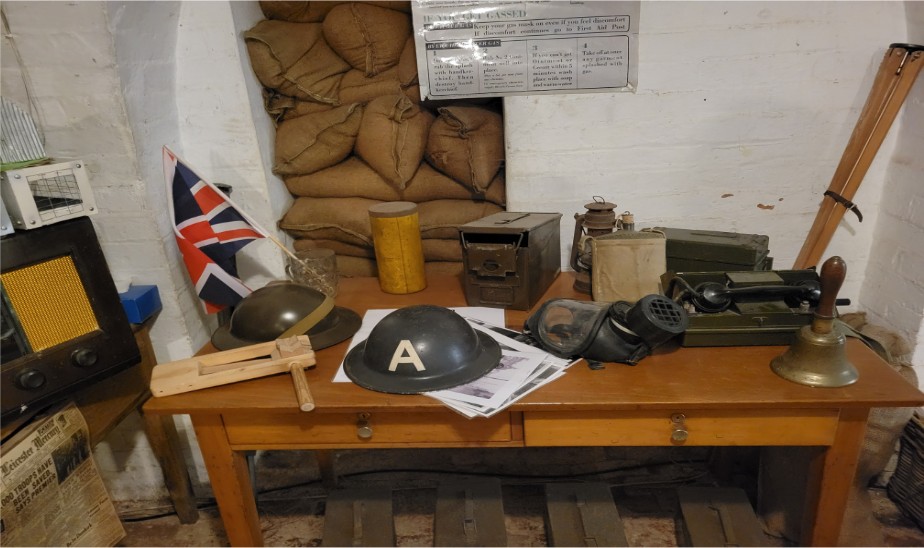
We then returned to the basements of the hall, where we visited the labyrinth of corridors leading to the air raid shelters, used during bombing raids. It was a very sobering feeling sitting there!
Jonno then took us back into the main part of the hall and upstairs, past the beautiful stained-glass window halfway up the main staircase, which shows the coats of arms of the Herrick family and the connections by marriage from the 16th to the 19th centuries. This magnificent work was completed in 1848 at a cost of £228. We also admired the quality of the carved wood on and around the staircase. The first-floor rooms have been restored, and have interesting historical documents and photographs on display. One of the rooms is now licensed for wedding ceremonies.
Our thanks to our extremely experienced and enthusiastic guide Jonno, for a wonderful tour, in which he shared his vast knowledge of Beaumanor and its background.